
Your wedding gallery is the first profound heirloom of your shared history. It’s a curated archive intended to outlast the flowers, the music, and even the memory of the evening’s specific scent. Many couples feel a deep sense of trepidation when faced with industry jargon, fearing a choice that might feel aesthetically hollow or dated in the years to come. Finding the right wedding photography styles explained in a way that resonates with your soul is the essential first step in preserving your milestone. You deserve a visual narrative that feels both intimate and grand, capturing the weight of your commitment with absolute clarity.
This guide serves as your artistic compass. We’ll explore the nuances between cinematic storytelling and classical portraiture, helping you define a vision that feels authentic to your journey. You’ll gain the mastery needed to choose a partner who sees the world as you do. From the unscripted honesty of documentary frames to the polished grace of editorial compositions, we’ll ensure your legacy is captured with the reverence it deserves. Together, we’ll transform your fleeting moments into a permanent collection of photo art that stands as a testament to your love.
Key Takeaways
- Master the nuances of wedding photography styles explained through an artistic lens to ensure your images remain a timeless testament to your devotion.
- Discern the vital differences between the polished, cinematic staging of editorial photography and the raw, unscripted intimacy found in documentary storytelling.
- Explore how aesthetic moods, from the ethereal lightness of fine art to the soulful shadows of a dark and moody palette, shape the emotional resonance of your gallery.
- Discover how intentional technical artistry, including motion blur and direct flash, can capture the high-energy pulse and whirlwind transitions of your celebration.
- Learn why a bespoke, narrative-driven approach is essential for articulating a visual vision that feels both deeply personal and grandly cinematic.
The Architecture of a Visual Legacy: What Are Wedding Photography Styles?
A wedding is a singular event. It’s a collision of history, hope, and high emotion. To have wedding photography styles explained is to understand that your choice is not a mere aesthetic preference; it is the structural foundation of your family’s visual legacy. Style exists at the intersection of technical mastery, emotional resonance, and artistic vision. It’s the silent language through which your story is told. When you choose a style, you’re not just selecting a color palette. You’re choosing the rhythm of your day, the energy of your reception, and the specific lens through which your future children will view your beginning.
Your photographer acts as a curator of your most intimate moments. They decide what is highlighted and what is softened. A documentary approach allows the day to unfold with unhurried spontaneity. Conversely, a more editorial approach introduces a sense of cinematic grandeur and deliberate grace. Understanding the ‘why’ behind these choices ensures your photos remain timeless, resisting the gravitational pull of fleeting trends that often leave galleries feeling dated within a decade. The right style preserves the weight of the moment while elevating the ordinary into the extraordinary.
Defining Your Artistic Vision
Moving from simply liking a photograph to understanding its underlying narrative is a transformative shift. Every aesthetic carries a psychological weight. Bright, ethereal imagery can evoke a sense of boundless hope and airiness, while deeper, more contrast-heavy frames suggest a profound, quiet intimacy. Your personal style, from the architecture of your home to the silhouette of your gown, should influence this choice. It’s about finding an artistic alignment that feels like a natural extension of your own identity, ensuring the final gallery resonates with your soul’s unique frequency.
Style vs. Editing: Clearing the Confusion
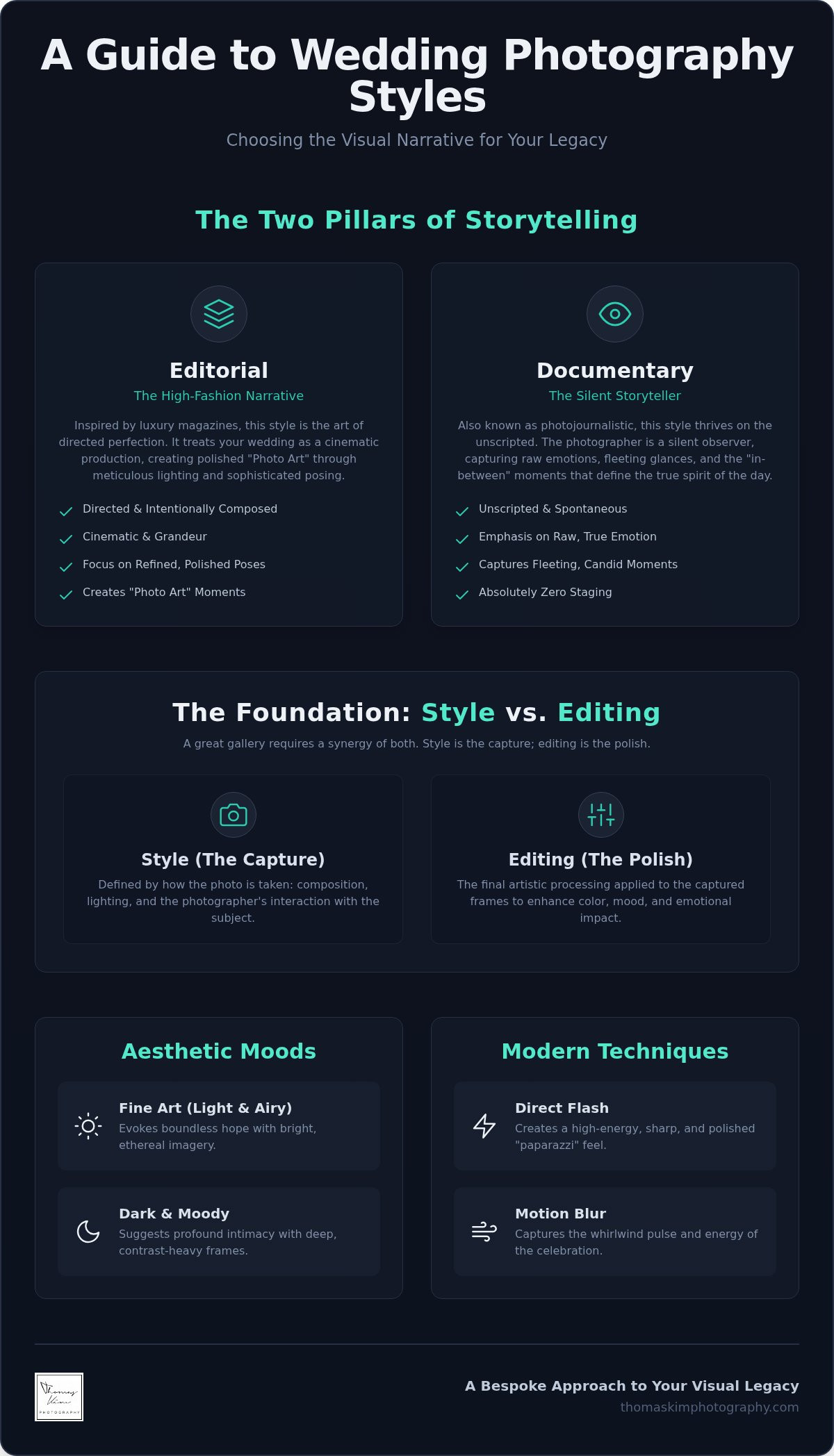
It’s vital to distinguish between how a photo is taken and how it is processed. Wedding photography styles are primarily defined by composition, lighting, and the photographer’s interaction with the subject. This is the “style.” Editing, or post-production, is the final polish applied to those frames. A well-composed shot possesses a permanence that no filter can replicate. A master photographer balances both, using technical skill to capture the moment and artistic processing to enhance its emotional impact. This synergy creates a cohesive gallery that feels intentional, refined, and deeply resonant.
Editorial vs. Documentary: Comparing the Two Great Pillars
The visual narrative of your wedding day usually anchors itself to one of two distinct philosophies. These pillars, editorial and documentary, represent a fundamental divergence in how a photographer interacts with your reality. To have wedding photography styles explained at this level is to recognize the difference between a curated masterpiece and a raw, historical record. One style seeks to elevate the moment into a cinematic tableau; the other aims to preserve the unvarnished truth of the experience. How a photographer handles the inherent “chaos” of a wedding day, from the frantic morning preparations to the high-energy reception, depends entirely on which pillar they stand upon.
Editorial: The High-Fashion Narrative
Drawing inspiration from the storied pages of luxury publications like Vogue or Harper’s Bazaar, editorial photography is the art of directed perfection. It treats your wedding as a high-end production where every detail, from the fall of the veil to the precise angle of the chin, is intentionally composed. This approach prioritizes the creation of “Photo Art” through meticulous lighting and sophisticated posing. It’s for the couple who views their wedding as a cinematic event, desiring images that feel like an exclusive fashion spread. A master of this craft uses direction to create a sense of effortless grace, ensuring that every frame looks intentional and refined.
Documentary: The Silent Storyteller
In contrast, documentary photography, often referred to as photojournalistic, thrives on the unscripted. The photographer becomes a silent observer, capturing the “in-between” moments that define the true spirit of the day. There is no staging here. Instead, there is a pursuit of raw emotion, the fleeting glance, and the quiet tear. This style is ideal for high-emotion milestones where authenticity is the primary goal. You can find more details on these variations in this comprehensive guide to photography styles, which highlights how these candid approaches have evolved to capture the honest heartbeat of a celebration.
The practical experience of these styles differs significantly. An editorial photographer will actively guide you, stepping in to adjust a pose or move a stray object to ensure visual harmony. A documentary photographer remains unobtrusive, allowing the day’s natural rhythm to dictate the frame. Most luxury couples now favor a hybrid approach. They desire the curated elegance of editorial portraits alongside the raw, emotional honesty of documentary coverage during the ceremony and reception. This blend ensures a gallery that is both aesthetically flawless and emotionally true. For a deeper exploration of how these two philosophies can be woven together into a singular visual legacy, our guide on editorial vs documentary wedding photography decodes the nuances every discerning couple should understand. If you are seeking a partner who can navigate these nuances with a visionary eye, exploring the bespoke wedding photography collections offered by Thomas Kim Photography can help define your specific visual narrative.
Aesthetic Moods: Fine Art, Dark & Moody, and the Allure of Film
Beyond the technical approach of the photographer lies the emotional atmospheric layer of your gallery. This is where wedding photography styles explained through a purely functional lens fail to capture the soul of the work. Aesthetic moods are the “color stories” of your milestone. They dictate how the light hits your skin, how the textures of your floral arrangements are rendered, and how the overall feeling of the day is preserved. Choosing between a luminous Fine Art look or a soulful Dark & Moody palette requires an understanding of how these styles interact with your specific environment.
Fine Art and the Southern California Light
Fine Art photography is defined by its bright, airy, and ethereal quality. In the context of a Los Angeles wedding, this style leverages the legendary “Golden Hour” to create portraits that feel bathed in a soft, heavenly glow. It’s a technical feat that requires a master’s eye to achieve a clean, sophisticated look without losing detail in the highlights. Outdoor garden weddings or private estates in Malibu pair perfectly with this aesthetic. For couples seeking to fully harness this fleeting window of light, our comprehensive guide to golden hour wedding photography LA offers a meticulous roadmap to capturing the cinematic “LA Glow” across the city’s most exclusive locations. The result is a collection of images that feel like a series of impressionist paintings, prioritizing softness, pastel tones, and a sense of boundless romance.
The Cinematic Drama of Dark & Moody
For those who prefer a narrative with more weight and mystery, the Dark & Moody style offers a profound alternative. This approach uses deep shadows and high contrast to create a sense of quiet intimacy. It’s particularly effective in indoor ballroom settings or historic Los Angeles landmarks where the architecture itself provides a dramatic backdrop. While some may lean toward Traditional and classical photography for its structured permanence, the Dark & Moody aesthetic adds a modern, cinematic edge. It transforms a candlelit ceremony into a soulful, high-contrast masterpiece. This style focuses on the emotional gravity of the moment, using light as a spotlight rather than a flood.
The allure of film photography remains a cornerstone of the luxury market. Analog media offers an organic color palette and a nostalgic grain that digital sensors often struggle to replicate. Whether it’s the creamy skin tones of medium format film or the raw, unfiltered feel of 35mm, the choice of media adds a tactile quality to your visual legacy. It’s about more than just a picture. It’s about a feeling of permanence, a connection to the past, and a commitment to craftsmanship that ensures your wedding gallery feels as significant fifty years from now as it does today. By matching these aesthetic moods to the unique character of your venue, you create a visual narrative that is both cohesive and deeply evocative.
Modern Trends and Technical Artistry: From Flash to Motion Blur
Modern artistry pushes the boundaries of traditional capture. In 2026, we see a bold embrace of technical “imperfection” used with surgical precision. To have wedding photography styles explained in the current era is to acknowledge the shift toward experiential imagery. It’s about how the night felt, not just how it looked. This technical artistry transforms a static gallery into a kinetic record of your celebration’s pulse, ensuring the energy of your milestone is preserved with absolute clarity and artistic intent.
Capturing Motion and Energy
The artistic use of slow shutter speeds conveys the whirlwind energy of the dance floor. It’s an intentional blur. This technique is becoming a staple for luxury Los Angeles reception coverage, where the sheer scale of the event demands a sense of movement. While classic portraits provide the foundation, these motion-heavy frames capture the effervescent spirit of the party. Balancing these kinetic shots with timeless compositions is essential to ensure your gallery maintains its sophisticated longevity. It’s the difference between a simple photograph and a living memory.
The Return of Direct Flash
We are seeing a definitive move away from soft, diffused lighting in favor of a bold, editorial party aesthetic. Direct flash creates a “paparazzi” feel that suggests exclusivity and high-society flair. It’s a sharp, high-contrast look that feels both vintage and contemporary. Integrating these flash techniques into your engagement or quinceañera sessions adds a layer of curated drama. It positions you as the protagonist of a high-fashion narrative, far removed from the generic glow of traditional photography. This approach celebrates the raw, vibrant atmosphere of your most significant celebrations.
The architectural perspective provided by aerial photography offers a grand view of your venue, while vintage patina infuses 2026 weddings with the nostalgia of the 1970s or 90s. These choices are not merely decorative; they are the deliberate tools of a master storyteller. Every frame should contribute to a larger, cohesive narrative of your journey. If you desire a visual legacy that captures both the grace and the grit of your milestone, explore the premium photography collections at Thomas Kim Photography to see how technical mastery can elevate your personal story.
The Bespoke Approach: Finding Your Vision with Thomas Kim
A luxury wedding is a complex tapestry of emotions, aesthetics, and logistical precision. A rigid, one-size-fits-all approach inevitably fails to capture the intricate layers of such a significant milestone. While having wedding photography styles explained provides a necessary foundation, the ultimate goal is the seamless integration of these techniques into a singular, bespoke narrative. Your story isn’t a template. It’s a living, breathing experience that requires a visionary eye to translate into a permanent visual legacy. True artistry lies in knowing when to employ the grace of an editorial pose and when to step back for a raw, documentary moment.
Thomas Kim’s philosophy centers on a narrative-driven approach that rejects the generic. It’s an artistic partnership. We move beyond the static inspiration board to define a visual language that is uniquely yours. By integrating high-end wedding photography with cinematic wedding videography, we ensure that every whisper, every glance, and every grand gesture is preserved with a consistent artistic voice. This synergy creates a comprehensive archive where the still images and the moving frames speak the same language of elegance and emotional depth. It’s about a total curation of your most significant memories.
Crafting Your Los Angeles Story
Los Angeles offers a diverse, challenging canvas for your milestone. From the rugged coastal bluffs of Malibu to the sleek, urban skylines of Downtown, the city demands a photographer who understands its unique character. Navigating the specific challenges of Southern California lighting requires more than just technical skill; it requires an intimate knowledge of how the golden hour interacts with our specific landscape. We specialize in creating “Photo Art” that transcends the digital gallery. These are images designed to serve as a permanent, sophisticated centerpiece in your home, acting as a daily reminder of the weight and beauty of your commitment.
The Thomas Kim Experience
Your milestone deserves a visionary, not a budget alternative. We maintain a polished, reverent atmosphere that treats your journey with the extreme importance it warrants. Our commitment to premium production standards ensures that every deliverable, from engagement sessions to quinceañera celebrations, feels both intimate and grand. It’s a high-touch service for those who value the craftsmanship of a dedicated storyteller. We don’t just take pictures; we archive legacies. The next step in your journey is a personal collaboration. We invite you to schedule a consultation to define your unique visual legacy and ensure your story is told with the timeless elegance it deserves.
Curating Your Timeless Narrative
Defining your visual legacy requires a deliberate move from casual observation to artistic intention. As we have explored through this guide to wedding photography styles explained, the most profound galleries are those that balance the polished grace of editorial staging with the raw, unscripted heartbeat of documentary moments. Whether you’re drawn to the ethereal glow of fine art or the high-energy pulse of modern flash techniques, your choice should reflect the soul of your journey. You deserve a collection that feels as significant in fifty years as it does today, preserving the weight of your milestone with absolute clarity.
Thomas Kim Photography specializes in this level of cinematic storytelling, offering bespoke media packages for weddings and quinceañeras across the high-end Los Angeles event scene. Our expertise in navigating local light and architecture ensures that your Photo Art becomes a permanent masterpiece in your home. It’s time to move beyond the inspiration board and into a visionary partnership that honors your unique story. Secure Your Legacy with Thomas Kim Photography and begin the journey of capturing your most sacred moments with premium production standards. Your milestone is an heirloom; let’s treat it with the reverence it deserves.
Frequently Asked Questions
What is the most timeless wedding photography style?
Classical photography remains the most timeless choice because it prioritizes clean composition and natural color reproduction. By avoiding heavy stylistic filters or extreme editing trends, these images retain their elegance across generations. This approach ensures your gallery feels like a permanent record rather than a fleeting fashion statement, preserving the weight of your milestone with a sense of dignified permanence and artistic clarity.
Can I mix different photography styles for my wedding day?
You absolutely can and should mix styles to capture the full complexity of your day. Most luxury couples favor a hybrid approach where editorial direction is used for formal portraits and documentary techniques are applied to the ceremony and reception. This allows for a curated visual narrative that feels both intentionally grand and emotionally authentic, ensuring every facet of your journey is documented with the appropriate artistic lens.
How do I know if a photographer’s style matches my venue?
Review a photographer’s portfolio for venues with similar lighting and architectural characteristics to your own. If your wedding is in a historic Los Angeles ballroom, look for a master of shadows and artificial lighting. If you’ve chosen a coastal bluff, seek out someone who excels at navigating the brilliance of the sun. Seeing how they interpret similar environments will confirm their technical alignment with your specific vision.
What is the difference between editorial and fine art photography?
Editorial photography focuses on the art of direction and cinematic staging to tell a specific, high-fashion story. Fine art photography is defined more by its aesthetic output, often leaning into bright, ethereal, and painterly qualities. While an editorial shot might be bold and dramatic, a fine art shot is typically soft and airy. Having these wedding photography styles explained helps you distinguish between the photographer’s method and the final visual mood.
Does the photography style affect the price of the package?
The chosen style can influence the investment required for your media package. Styles that utilize analog film media involve significant costs for development and scanning, while high-energy reception styles may require advanced lighting equipment and additional assistants. A bespoke approach tailored to your vision reflects the level of craftsmanship, technical precision, and premium production standards necessary to create a sophisticated and permanent visual legacy.
How do I describe my preferred style if I don’t know the technical terms?
Focus on emotional descriptors and visual references rather than technical jargon. Describe the feeling you want your gallery to evoke, such as “cinematic drama,” “quiet intimacy,” or “airy romance.” Sharing a curated collection of images that resonate with you allows a visionary artist to identify the underlying wedding photography styles explained in your preferences, translating your personal feelings into a concrete artistic plan.
Is film photography better than digital for a classic look?
Film photography offers an organic grain and a unique color palette that provides a distinct, nostalgic soul to your images. While digital technology has become exceptionally advanced, many luxury clients prefer film for its tactile quality and its connection to the history of the craft. It creates a sense of permanence and craftsmanship that is difficult to replicate, making it a premier choice for a classic, high-end look.
What style of photography is best for a Los Angeles outdoor wedding?
Fine Art photography is often considered the premier choice for outdoor Los Angeles weddings. This style thrives in the region’s legendary “Golden Hour” light, producing luminous and high-end portraits that feel bathed in a soft, heavenly glow. It beautifully complements the lush greenery of garden estates or the dramatic vistas of the coast, ensuring your milestone is captured with a sense of boundless, airy elegance.