
Your wedding album is not a storage device for digital files; it’s the definitive cinematic legacy of your union. After receiving a gallery of eight hundred or more breathtaking images, the weight of selection often feels like a burden rather than a celebration. You likely find yourself paralyzed by decision fatigue, caught between the desire for artistic perfection and the pressure of family expectations. Learning how to choose photos for your wedding album requires shifting your perspective from a simple collector to a discerning editor. It’s about distilling a thousand fleeting seconds into a singular, cohesive narrative that commands attention and reverence for generations.
We understand the profound anxiety of leaving behind a vital memory or compromising your aesthetic vision. This guide reveals the professional curation techniques used by luxury photographers to transform a vast digital archive into a timeless, cinematic heirloom. You’ll discover a methodical three-pass system to eliminate redundancy, balance emotional candids with formal portraits, and master the editorial pacing that makes a physical book feel like a living film. By the end, you’ll possess a curated masterpiece that reflects the true weight and significance of your milestone.
Key Takeaways
- Shift your perspective from digital preservation to editorial storytelling by prioritizing deep emotional resonance over mere technical perfection.
- Master how to choose photos for your wedding album using a professional three-pass system designed to eliminate decision fatigue and highlight your most significant milestones.
- Implement the cinematic 60-20-20 rule to achieve a sophisticated balance between grand portraits, intimate candids, and evocative environmental details.
- Structure your narrative into chronological chapters using specific anchor images to guide the viewer through a seamless and intentional visual journey.
- Adopt a “less is more” philosophy to ensure each spread possesses the breathing room and dignity required for a true high-end heirloom.
The Philosophy of Legacy: Reframing Your Selection Mindset
Legacy begins the moment the shutter clicks, but it’s solidified in the curation. When you consider how to choose photos for your wedding album, you must first divorce yourself from the idea of a digital backup. A gallery is a collection of data; a curated heirloom is a collection of meaning. While your online gallery may contain a thousand beautiful frames, the physical album demands a higher standard of intentionality. It’s a cinematic narrative where every page turn serves a purpose. You aren’t just selecting images. You’re directing a film that will play for decades on the laps of your children and grandchildren. The process of narrowing down your gallery is not a subtraction of memories, but an elevation of your most profound moments.
The 50-Year Rule for Photo Selection
Ask yourself a singular question: will this frame still vibrate with emotional energy in five decades? Trends in social media poses or specific filters are fleeting. True legacy resides in the unscripted. It’s the tear in a mother’s eye or the silent, steady grip of a grandfather’s hand. These are the people who form the bedrock of your history. When choosing between a technically perfect portrait and a slightly blurred moment of raw joy, the emotion should win every time. Throughout history, traditional and flush-mount photo albums have served as the physical vessels for these memories, evolving from simple paper sleeves into the rigid, archival masterpieces we craft today. Prioritize the faces of those who won’t be here forever. Those are the images that will appreciate in value like fine art.
Embracing the Editorial Perspective
Luxury is defined by what you leave out. To achieve a high-end aesthetic, you must adopt the ruthless eye of a magazine editor. Seek out the “hero” shots, those singular, commanding images that can carry an entire spread alone. These focal points are enhanced by the deliberate use of white space and minimalist layouts. This approach honors the Thomas Kim’s Image Style, which prioritizes cinematic depth over cluttered collages. By allowing your most powerful images room to breathe, you elevate the experience from a simple viewing to a profound emotional journey. Think in spreads, not individual photos. A single, full-bleed landscape often says more than a dozen small snapshots. This editorial discipline ensures your album remains a sophisticated piece of art rather than a chaotic scrapbook.
Creating a Structural Framework: The Three-Pass System
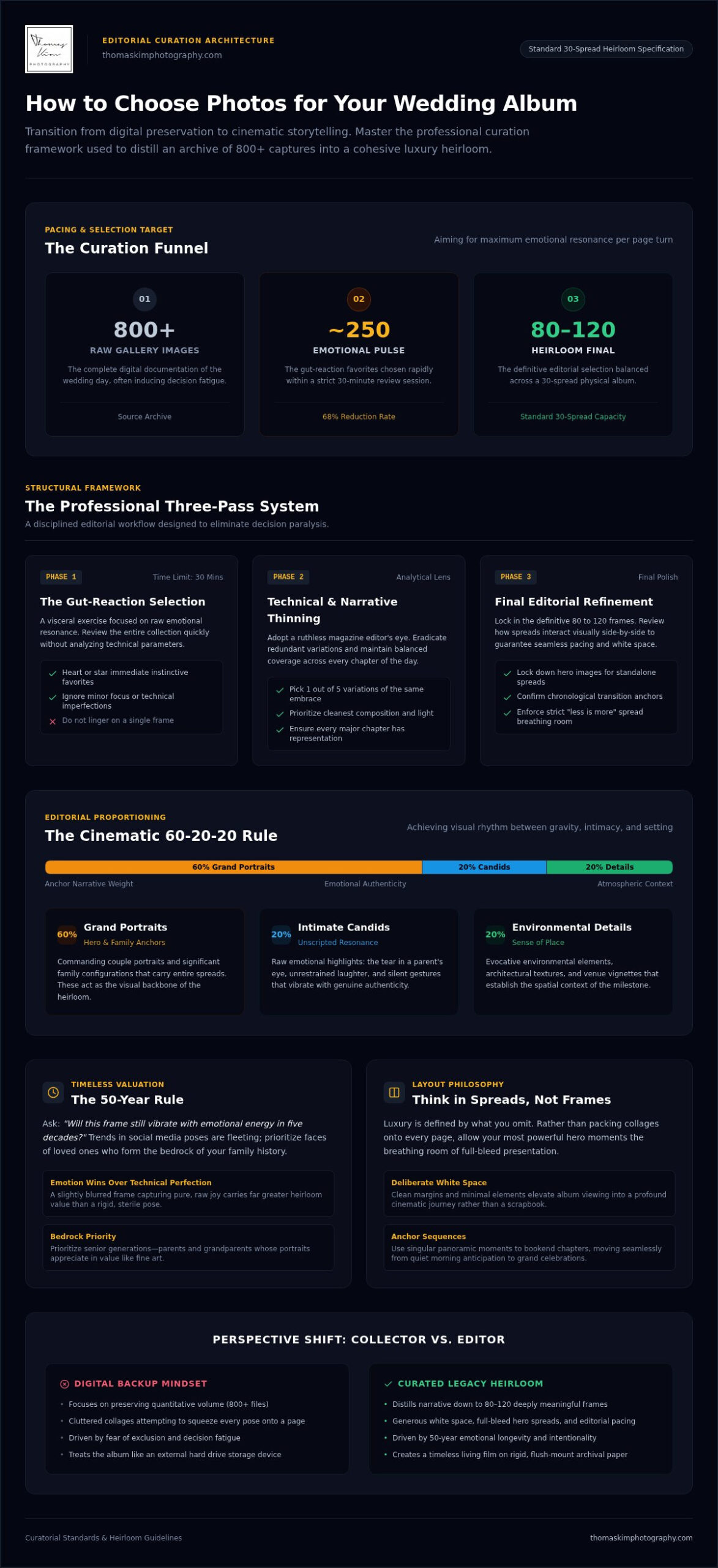
Selection paralysis is the silent enemy of the heirloom. When you’re faced with a gallery of nearly a thousand breathtaking frames, the mind naturally retreats into indecision. Mastering how to choose photos for your wedding album depends on shifting from a passive viewer to an active curator. Before you begin, set a concrete target. For a standard 30-spread heirloom book, professional designers recommend a selection of 80 to 120 images. Use the digital tools within your gallery to heart or star your favorites, allowing the software to act as your primary organizational assistant. This repeatable methodology is the most effective way to learn how to choose photos for your wedding album without losing the heart of your story.
The First Pass: The Gut-Reaction Selection
This is a visceral exercise. Open your gallery and move quickly through the images. Don’t analyze the lighting, the focus, or the background. If a photo makes you smile, tear up, or hold your breath, heart it immediately. Limit this phase to 30 minutes. You’re capturing the raw emotional pulse of the day. At this stage, technical flaws are irrelevant; you’re simply identifying the moments that resonate with your soul. If you find yourself lingering too long on a single frame, move on. The goal is to reduce the initial mountain into a manageable hill of approximately 250 images.
The Second Pass: Technical and Narrative Thinning
Now, you must adopt a more clinical eye. This phase is about eliminating redundancy and ensuring narrative flow. If you have five variations of the same embrace, choose the one with the most evocative expression and the cleanest composition. This is where Professional Photo Editing Standards become your guide, as you look for the visual consistency that defines a luxury collection. Ensure every chapter of the day is represented, from the quiet anticipation of the morning to the high-energy celebration of the night. You’re building a story, and every story needs a beginning, middle, and end.
The Third Pass: Final Curation for Flow
The final pass is where the masterpiece takes shape. Identify your hero images, those singular, commanding shots that deserve the dignity of a full-page spread. Balance the distribution of color and black-and-white images to maintain a sophisticated visual rhythm throughout the book. As you finalize your choices, consider the longevity of the physical object. Following the Library of Congress guidelines on photo preservation ensures that your selections are destined for archival materials that resist the passage of time. If you find the process daunting, remember that partnering with a visionary artist can help you refine these choices into a singular cinematic legacy.
The Narrative Architecture: Sequencing Your Story
A masterfully curated album functions like a cinematic masterpiece. It possesses a distinct rhythm, a deliberate pace, and a profound emotional arc. When you determine how to choose photos for your wedding album, you must look beyond the individual frame to see the larger narrative architecture. Your story is told in chapters: the quiet anticipation of preparation, the sacred gravity of the ceremony, the intimate grace of portraits, and the exuberant release of the celebration. By utilizing anchor images to bookend each section, you provide the reader with a clear visual map. This structure guides them through the tension and resolution of your day, ensuring the experience feels intentional rather than accidental.
The Art of the Introduction
Every great story requires an establishing shot. This is the image that sets the atmospheric tone for the entire collection. It might be a wide, architectural view of your Los Angeles venue or a delicate macro shot of an heirloom invitation. These initial pages build the world your memories inhabit. The quiet, tactile moments of Luxury Getting Ready Photography serve as the first movement of your symphony. They capture the subtle details: the scent of perfume, the weight of the veil, and the nervous laughter of your closest companions. These frames provide the necessary context for the emotional peaks that follow, grounding the viewer in the specific reality of your morning.
The Emotional Peak: Ceremony and Portraits
The ceremony is the heartbeat of your legacy. It’s the moment where time slows and the weight of your commitment takes center stage. When you’re considering how to choose photos for your wedding album, focus on the raw, unscripted reactions. The intake of breath as the doors open. The steady gaze during the exchange of vows. The triumphant joy of the recessional. These moments deserve the most prominent placement in your layout. Following the ceremony, your album should transition into the refined elegance of your formal session. Balancing editorial Bridal Portraits with candid couple interactions creates a dynamic visual flow that feels both intimate and grand.
As you sequence these pivotal moments, remember that you’re building a document intended to survive the centuries. Adhering to the National Archives family preservation guidelines ensures that your physical heirloom is treated with the same reverence you applied to the selection process. By varying the pace between busy, high-energy reception shots and quiet, reflective ceremony moments, you create a narrative that breathes. This intentional sequencing transforms a simple book into a profound experience that resonates with the dignity your milestone deserves.
Balancing Visual Rhythm: Portraits, Details, and Candids
Visual harmony is the hallmark of a luxury heirloom. When mastering how to choose photos for your wedding album, you must balance the grand with the granular. Professional curators often employ a 60-20-20 framework. This structural philosophy provides a clear strategy for how to choose photos for your wedding album by allocating sixty percent of your spreads to key moments and portraits, twenty percent to editorial details, and twenty percent to unscripted candids. This ratio prevents the narrative from becoming a repetitive list of faces. It creates a rhythmic cadence that mimics the human experience of the day, alternating between focused emotional attention and broad environmental awareness.
The Role of Editorial Details
Editorial details are the connective tissue of your story. Invitation suites, intricate floral arrangements, and the specific architecture of iconic Los Angeles venues provide the essential context for your memories. These macro shots serve as visual transitions. They offer the eye a necessary moment of rest between high-emotion portraits. By incorporating the textures of your day, you elevate the album from a simple photo book to a sensory record. These details act as breathable white space, allowing your hero images to command the significance they deserve. Mixing wide-angle environmental shots with these intimate close-ups ensures the viewer feels the scale and the soul of the event.
Candid vs. Formal: The Eternal Balance
The tension between formal structure and raw energy is where the story lives. You must integrate Family Portraits with intentional care. These essential records should be grouped chronologically or thematically to avoid disrupting the cinematic flow of the couple’s journey. Contrast these structured moments with candids that capture the kinetic energy of the reception. A sophisticated album ensures that the formal tone of the ceremony remains consistent with the high-register portraiture, even as the narrative moves into the unscripted joy of the dance floor. Facing pages must share a consistent color palette to maintain a cohesive visual journey throughout the heirloom.
Achieving this delicate visual rhythm is the difference between a scrapbook and a masterpiece. If you are ready to transform your gallery into a curated legacy, partner with Thomas Kim to begin your bespoke curation process.
Refining the Heirloom: Final Curation and Layout
The final review is a moment of profound stillness. After the rigorous work of narrowing down your gallery, you must now step back to view the collection as a singular, living entity. A truly luxury heirloom isn’t a compilation; it’s a composition. This final audit ensures that the emotional arc you’ve built remains consistent from the first page to the last. When you finalize how to choose photos for your wedding album, you’re essentially performing the final color grade on a film. Every spread must speak to the next, maintaining a visual dialogue that feels intentional, unhurried, and deeply resonant.
The Power of White Space
Luxury is often defined by what’s absent. In high-end book design, white space isn’t “empty” space; it’s the breath that allows your memories to live. Overcrowding a page with too many images diminishes the psychological impact of each individual frame. It creates a sense of frantic energy that is antithetical to the concept of a legacy. By utilizing single-image spreads for your most cinematic moments, you grant those memories the dignity they deserve. This minimalist approach creates a sense of unhurried elegance, ensuring that the viewer lingers on the emotion of the moment rather than the clutter of the layout.
Finalizing the Legacy
The cover of your album is the face of your history. It’s the first thing your descendants will touch; it must represent the soul of the entire day. Choosing the right cover image requires finding a frame that summarizes the emotional weight of your union, often a grand, environmental portrait that feels both intimate and expansive. This selection should be paired with tactile materials like European linens or archival leathers that reflect the aesthetic of your Los Angeles venue. This is the moment where the technical meets the emotional, resulting in a physical object that feels as significant as the day itself.
The final polish of your heirloom shouldn’t be a solitary task. It’s an artistic partnership where your personal memories meet professional expertise. To ensure your vision is executed with the highest production standards, you should Contact Thomas Kim for Bespoke Design. This collaboration allows a visionary artist to refine your selections, ensuring that every detail of how to choose photos for your wedding album leads to a timeless, cinematic masterpiece that will be cherished for generations.
Preserving Your Cinematic Legacy for Generations
Your wedding album is the final, tangible expression of your most significant milestone. By applying a disciplined three-pass system and embracing the editorial 60-20-20 rule, you transform a digital gallery into a curated masterpiece. You’ve learned how to choose photos for your wedding album by prioritizing emotional resonance over fleeting trends, ensuring every page turn reveals a narrative of unhurried elegance. This process is not merely a task; it’s an act of deep reverence for your personal history.
Every frame selected is a stitch in the fabric of your family’s future. Thomas Kim specializes in Los Angeles luxury milestone events, where artistic excellence is prioritized over budget-tier alternatives. With premium production standards for every piece of Photo Art, your memories are protected by the highest archival benchmarks. This is where your story becomes permanent. Begin your journey toward a cinematic wedding legacy with Thomas Kim. Entrust your once-in-a-lifetime moments to a visionary artist who treats your legacy with the gravity it deserves. Your masterpiece awaits.
Curation and Legacy: Frequently Asked Questions
How many photos should be in a 20-page wedding album?
Professional standards suggest selecting between 40 and 60 images for a 20-page album. This count ensures a clean, editorial layout that avoids visual clutter. Overcrowding diminishes the impact of each frame. By limiting the count, you ensure each piece of Photo Art has the dignity of white space. This minimalist approach is a hallmark of luxury design for discerning couples in Los Angeles.
Should I include black and white photos in my wedding album?
Black and white images add a timeless, cinematic quality that transcends fleeting color trends. They focus the viewer on raw emotion and texture rather than palette. When deciding how to choose photos for your wedding album, aim for a balanced distribution. Ensure facing pages share the same treatment to maintain a sophisticated visual rhythm throughout your physical heirloom.
How do I choose between two very similar photos?
Prioritize emotional resonance over technical perfection. If one frame captures a deeper connection or a more unscripted expression, it’s the superior choice for your legacy. Look for the hero shot that carries the narrative weight of the scene. Ruthless curation is necessary to transform a vast digital gallery into a cohesive, high-end document that speaks to future generations.
Can I include engagement photos in my wedding album?
Engagement photos are often better suited for a separate guest book or a dedicated engagement heirloom. A wedding album should maintain a singular focus on the gravity and celebration of the marriage day itself. If you do include them, use them as a brief, artistic prologue. This establishes your journey in Los Angeles before the sacred ceremony begins on the following pages.
What is the best photo for the wedding album cover?
The ideal cover image is a grand, environmental portrait that summarizes the soul of your celebration. It should be an iconic shot that feels both expansive and intimate. This image acts as the face of your history. Select a frame that possesses enduring artistic quality and represents the overarching aesthetic of your union, serving as a dignified introduction to your story.
How long does it typically take to choose photos for an album?
Most couples spend between two and four hours using a structured, three-pass system. Setting a strict time limit for the initial gut-reaction phase prevents overthinking and decision fatigue. By following a methodical approach, you can navigate the selection process with clarity. This ensures your final curated collection feels like a professional editorial piece rather than a disorganized digital archive.
Is it better to have more pages or fewer, larger photos?
Fewer, larger photos on more pages create a far more sophisticated and unhurried experience. Luxury design relies on the power of the singular image to command total attention. Instead of shrinking your memories to fit a specific page count, expand the album. This allows your most cinematic moments the breathing room they require to truly resonate with the viewer.
Should I organize my album chronologically or by theme?
A chronological organization is the standard for building a cinematic narrative with emotional tension and resolution. This structure allows the viewer to relive the natural rhythm of the day, from the quiet morning preparation to the high-energy reception. Learning how to choose photos for your wedding album involves respecting this timeline while using artistic transitions to bridge each significant chapter.